Luxury Building Connection Design USA: Precision Engineering Guide
In the upper echelon of American architecture, the definition of luxury has shifted away from mere surface ornamentation toward a deep, obsessive focus on the performance of the building envelope. The most significant indicator of this shift is the attention paid to the junction—the precise point where distinct materials, structural systems, and climate-control zones meet. Luxury Building Connection Design USA. High-end residential and commercial developments now demand a level of technical rigor that was previously reserved for mission-critical infrastructure, turning the humble connection into the centerpiece of the architectural experience.
This heightened scrutiny is not an arbitrary trend but a direct response to the increasing complexity of modern building codes, the demand for expansive, pillar-free interior spaces, and the requirement for extreme energy efficiency. In these high-stakes environments, a connection is never simply a structural link; it is a thermal, hydrological, and acoustic regulator. When a luxury project fails, the failure almost invariably occurs at these transitional nodes, where the mismatch of material properties or the neglect of structural deflection manifests as chronic performance degradation.
Achieving the level of refinement expected in premium developments requires a departure from standard, code-minimum detailing. It demands a specialized knowledge base that bridges the gap between structural engineering, envelope science, and industrial design. The following analysis explores the methodologies that define elite practice in the United States, offering a framework for those tasked with the realization of the most ambitious architectural visions in the country.
Understanding “luxury building connection design usa”
When industry professionals investigate the nuances of luxury building connection design usa, they are grappling with the fundamental friction between aesthetic aspiration and the physics of material behavior. The primary misunderstanding is the assumption that luxury design is synonymous with complexity. In reality, the most sophisticated connections are often characterized by their profound simplicity—a simplicity that is only achieved through immense effort and advanced engineering. To make a heavy steel beam disappear into a delicate glass facade, or to create a truly flush threshold that manages high-volume water runoff, requires a level of coordination that far exceeds standard practice.
The risk of oversimplification in this sector is existential. Design teams often rely on proprietary “system-integrated” details without understanding the specific structural stresses of the building they are constructing. Oversimplification leads to the “black box” failure mode, where a complex, factory-engineered component is integrated into an environment that its designers never intended. When the connection fails, the cost of remediation—which often involves the dismantling of custom interior finishes and expensive stone cladding—is prohibitive.
Furthermore, the American context of these designs is unique due to the extreme variation in climate and regulatory environment. A design that succeeds in the temperate, seismic-active zones of the Pacific coast will face entirely different stresses in the high-humidity, hurricane-prone environments of the Southeast. True topical mastery involves recognizing these contextual variables and refusing to treat luxury detailing as a set of universal, repeatable solutions.
Deep Contextual Background
The trajectory of connection design in the American luxury market has evolved from the craft-based traditions of the early 20th century to the computational-precision era of today. Historically, connections were managed through mass and redundancy; a heavy stone lintel didn’t require high-level thermal modeling because its thermal mass was its protection. The post-war shift toward light-gauge metal, massive glazing, and high-performance climate control rendered those traditional methods obsolete.
As energy efficiency became the dominant concern of the 21st century, the industry faced a crisis: our buildings had become so airtight and highly insulated that the remaining “thermal bridges”—the very connections we use to hold the building together—became the primary sources of energy leakage. This realization catalyzed the development of structural thermal breaks and high-performance gaskets, tools that have since become the standard in luxury building connection design. We have entered an era where the connection is the most technologically dense part of the building.
Conceptual Frameworks
The Thermal Continuity Model
This framework treats the entire building envelope as a single, uninterrupted thermal skin. The design objective is to ensure that no structural element pierces the insulation layer without a high-performance thermal break, preventing the temperature differentials that lead to condensation and structural degradation.
The Tolerance-Mapping Strategy
Recognizing that no building is built to the millimeter-perfect accuracy of a CAD model, this mental model mandates that connections be designed with “adjustment buffers.” It allows for the inevitable field-level variations in steel fabrication and concrete pouring without compromising the visual or structural intent of the luxury finish.
The Hydrostatic Diversion Framework
This model assumes that all joints will leak over time. It shifts the burden of performance from the sealant (which will eventually fail) to a secondary, hidden drainage plane—a “fail-safe” system that guides water away from the structure even when the primary barrier is compromised.
Key Categories and Variations
Classification of Premium Junctions
-
Structural Thermal Breaks: Advanced, load-bearing polymer or reinforced inserts used between internal floors and exterior balconies to prevent heat loss.
-
Invisible Fastening Systems: Mechanical connections hidden behind stone, wood, or metal cladding, utilizing gravity or clip-based friction fits to maintain a seamless aesthetic.
-
High-Deflection Glazing Interfaces: Specialized tracking that allows for the building to sway and settle without putting pressure on the high-cost glass panels.
-
Acoustic Isolation Nodes: Connections designed with high-density damping materials to decouple luxury residences from vibration-inducing mechanical systems.
Comparison Table: Decision Logic
| Node Type | Structural Load | Thermal Performance | Aesthetic Impact | Coordination Load |
| Thermal Break | High | Critical | Hidden | High |
| Invisible Fastening | Low | Moderate | High | Extreme |
| Glazing Track | Moderate | High | High | High |
| Acoustic Node | Low | Low | Hidden | Moderate |
Detailed Real-World Scenarios Luxury Building Connection Design USA
The High-Rise Cantilevered Balcony
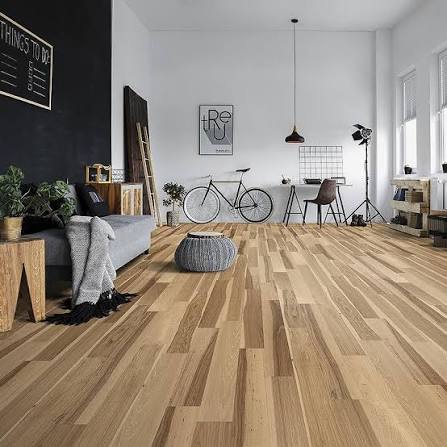
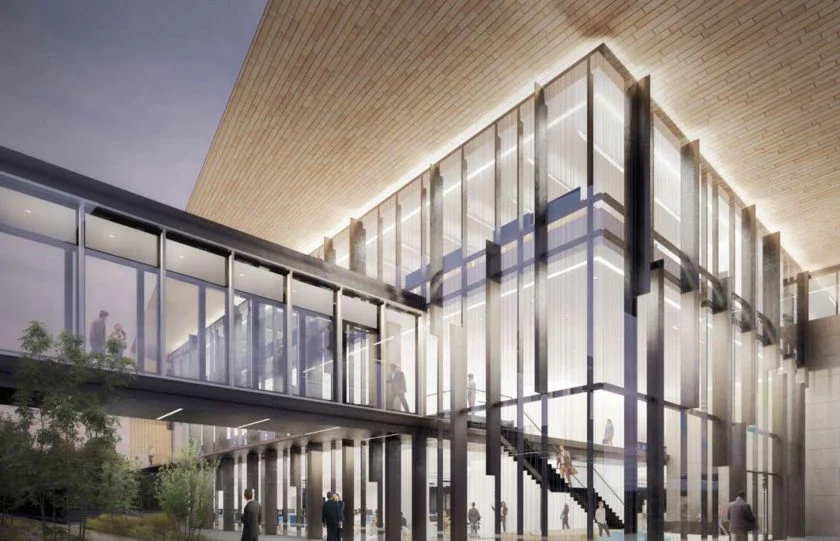
Constraints involve massive dead-load cantilever forces and high wind-driven rain. Failure mode: The thermal break fails due to poor installation, leading to localized frost on the interior floor. The second-order effect is the destruction of the finished hardwood flooring in the high-end interior. Design decision: Use of a specialized, project-specific thermal connector with secondary waterproof flashings.
The Flush-Entry Glazing Transition
Constraints involve maintaining a perfectly level floor between the interior penthouse and the exterior terrace. Failure point: Water ponding at the track due to insufficient drainage slope. Second-order effect: Corrosion of the track and moisture infiltration into the living space. Design decision: Implementation of an active, heated trench drain integrated into the structural subfloor.
The Stone-Clad Curtain Wall
Constraints include the differential movement between the heavy stone panels and the structural steel frame. Failure mode: The attachment clips fail due to thermal fatigue or seismic vibration. Second-order effect: A catastrophic loss of exterior cladding, posing a life-safety risk and extreme liability. Design decision: Use of seismic-certified, three-dimensional adjustment brackets.
Planning, Cost, and Resource Dynamics
| Stage | Cost Driver | Primary Risk | Sustainability Value |
| Engineering/Modeling | Moderate | Design Errors | Exceptional |
| Fabrication/Materials | High | Quality Control | Moderate |
| Installation/Commissioning | Very High | Field Deviations | Critical |
Tools, Strategies, and Support Systems
-
3D Hygrothermal Modeling: Simulating the moisture and temperature profile of a joint over a 50-year period to identify hidden failure risks.
-
Full-Scale Mock-ups: The most important tool in luxury design; testing the actual connection under real-world water-pressure and temperature conditions before mass fabrication.
-
Building Envelope Commissioning (BECx): A systematic verification process ensuring that the finished connection matches the engineering design.
-
Digital Twin Documentation: Maintaining a permanent digital record of the precise specifications and material batches for every critical connection, allowing for precise repairs decades later.
Risk Landscape and Failure Modes
The failure of luxury connections is rarely caused by a lack of money; it is almost always caused by a lack of coordination. When structural, architectural, and MEP teams work in silos, the connection detail is the first thing that gets compromised. The taxonomy of these risks includes:
-
Material Incompatibility: Using dissimilar metals (e.g., aluminum and steel) without proper isolation, leading to galvanic corrosion.
-
Unaccounted Deflection: Designing a rigid joint in a flexible building, leading to material snapping under load.
-
Sealant Over-Reliance: Treating the sealant as the primary barrier rather than the last line of defense.
Governance, Maintenance, and Long-Term Adaptation
Luxury buildings require a dedicated “Envelope Operations Manual.”
-
Annual Visual Inspection: A non-negotiable review of all exposed joints for signs of sealant fatigue or cladding misalignment.
-
Drainage Flush Cycles: Protocol for clearing the internal weep systems, which are essential for long-term performance.
-
Adjustment Protocols: Specific, engineer-certified procedures for when the building experiences settling, ensuring that the connection hardware can be “tuned” to compensate.
Measurement, Tracking, and Evaluation
-
Leading Indicators: The results of air-pressure testing on the full-scale mock-up; the consistency of the torque-setting documentation for mechanical fasteners.
-
Lagging Indicators: Frequency of warranty calls related to water infiltration or thermal bridging in the years following occupation.
-
Documentation Example: The “Connection Performance Log,” which archives the specific thermal and structural data of each node, providing a baseline for future maintenance.
Common Misconceptions
-
Myth: “Luxury design means using the most expensive material.” Correction: Luxury design means using the right material for the specific load, climate, and motion characteristics of the building.
-
Myth: “Standard details are ‘good enough’ for high-end projects.” Correction: Standard details are designed for standard buildings. Luxury buildings have extreme performance targets that require extreme detailing.
-
Myth: “The general contractor will ‘make it work’.” Correction: Complex, high-performance connections require specialized installation teams. Expecting a standard contractor to “fix” a flawed engineering detail is a recipe for failure.
Ethical, Practical, and Contextual Considerations
The duty of the luxury architect is the preservation of value. When a building is commissioned at the highest level, the owner is making an investment in long-term performance. Failing to resolve the connections is a violation of that investment. Furthermore, there is an ethical imperative to create buildings that do not require constant, wasteful reconstruction. A well-designed connection is a long-term asset, reducing the carbon footprint of the building through increased energy efficiency and a longer service life.
Conclusion
The architecture of luxury is not found in the superficial beauty of a facade, but in the hidden rigor of the connections that hold it together. By mastering these junctions, practitioners move from being merely aesthetic stylists to being true stewards of the built environment. Resilience in luxury development is the result of applying scientific discipline to the most vulnerable points of the structure, ensuring that the building remains not just beautiful, but physically and performatively whole for the generations that will follow. Adaptability, foresight, and a commitment to radical technical honesty are the pillars upon which elite architectural success is built.