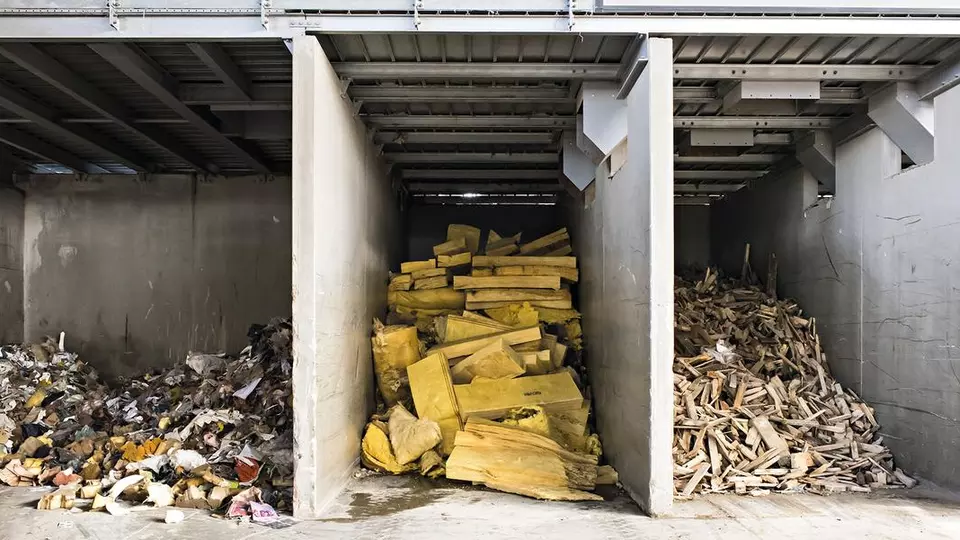
How to Reduce Construction Waste: A Definitive Guide for Sustainable Building
Construction debris accounts for a staggering portion of global landfill input, representing not just a logistical burden but a profound failure in resource efficiency. The traditional model of linear consumption—procure, install, discard—ignores the embedded energy and economic value inherent in building materials. How to Reduce Construction Waste. Addressing this challenge requires more than simple recycling; it demands a fundamental redesign of how projects are planned, managed, and executed on-site.
The complexity of minimizing waste resides in the intersection of scheduling, material selection, and site logistics. Discrepancies between design specifications and actual site conditions often force last-minute adjustments, leading to unnecessary offcuts and material damage. Planners must view the site not as a graveyard for surplus materials, but as a controlled environment where every unit of matter is accounted for and optimized throughout the project lifecycle.
Achieving meaningful reductions in output depends on integrating waste avoidance into the earliest project phases. By the time ground is broken, most waste trajectories are already locked into the procurement strategy. This article dissects the systemic adjustments required to transform construction sites into high-efficiency zones of material stewardship.
Understanding “how to reduce construction waste”
The Systemic Nature of Material Loss
When project managers investigate how to reduce construction waste, they must confront the reality that most waste is design-induced. Over-specification, lack of modular coordination, and poor integration of trade schedules create environments where material damage and surplus are inevitable. A robust approach treats waste as a defect in the system—a signal that the planning phase failed to account for real-world field constraints.
Addressing Common Misunderstandings
A common fallacy suggests that “waste reduction” is synonymous with “better recycling practices.” While diverting materials from landfills is essential, true mastery focuses on avoidance at the source. Recycling is merely an admission that the initial plan yielded more material than the building required. Relying on end-of-pipe solutions masks the inefficiency inherent in the original design and procurement processes.
Risks of Oversimplification
Reducing waste is not a single, universal task; it is a context-dependent discipline. Attempting to force a standardized “zero-waste” checklist onto every project without considering site access, labor skill, or material volatility leads to frustration and missed targets. Planners who approach this as a static checklist rather than an iterative process fail to capture the nuance required for high-performance outcomes.
Deep Contextual Background
The historical evolution of building has shifted from an era of scarcity, where materials were salvaged and reused by necessity, to a modern industrial period defined by low-cost, mass-produced inputs. This paradigm shift democratized construction but severed the connection between material value and building lifespan.
Today, the industry stands at a threshold where rising disposal costs and environmental regulations are forcing a return to resource mindfulness. The transition from industrial linear models to circular frameworks is the defining challenge of the next generation of project management. This shift is not merely aesthetic or ecological; it is a necessary evolution to maintain profitability in an era of constrained material supply.
Conceptual Frameworks
The Hierarchy of Material Value
This framework ranks interventions based on their impact: 1) Prevention through design, 2) Optimization through procurement, 3) Reuse through site logistics, and 4) Downcycling through external partners. Each tier requires progressively higher operational effort, reinforcing the importance of prioritizing the top of the hierarchy.
The Modular Coordination Model
By aligning design dimensions with the standard sizes of materials—such as panel widths or stud spacing—planners eliminate the need for significant cutting and fitting. This proactive alignment drastically reduces offcut generation, though it limits design flexibility during the creative phase.
Just-in-Time Material Stewardship
Traditional sites operate on “bulk delivery” logic, which leads to overcrowding, weather damage, and theft. The Just-in-Time framework coordinates deliveries to meet immediate installation windows. This minimizes exposure to the elements and reduces the footprint required for on-site material management, though it increases the complexity of logistics coordination.
Key Categories and Variations
Classification of Waste Streams
-
Dimensional Offcuts: Resulting from manual cutting of standard materials; mitigated through precise digital modeling and modular planning.
-
Packaging Debris: Often overlooked, this includes pallets, crates, and plastic wraps; addressed through “take-back” agreements with suppliers.
-
Operational Excess: Ordering errors and buffer percentages; resolved through accurate quantity surveying and integrated project delivery.
-
Damage through Handling: Waste caused by poor site logistics; prevented by designated staging areas and protected storage.
Decision Logic for Management
| Category | Primary Driver | Strategy Focus | Cost-Benefit Profile |
| Structural | Over-spec | Optimization | High Long-term Gain |
| Architectural | Design detail | Modular Coordination | Moderate Effort |
| Logistical | Handling | Staging/Protection | Low Effort/High Impact |
| Contractual | Ordering | Supplier Pacts | Administrative Focus |
Detailed Real-World Scenarios How to Reduce Construction Waste
The High-Density Urban Retrofit
In constrained city centers, storage space is non-existent. The decision to use pre-fabricated, off-site components becomes the only way to manage waste. Every piece arrives ready to install, eliminating the need for cutting zones on the sidewalk. Failure to coordinate these deliveries perfectly, however, results in project-wide stalls.
The Large-Scale Residential Subdivision
Mass production allows for high-degree standardization. Builders here use specialized “cutting centers” where waste from one unit is sorted and reassessed for use in smaller applications within other units. The constraint is the additional labor required to manage the inventory of small remnants.
The Specialized Institutional Project
Complex geometry in unique buildings prevents standard modularity. The focus here shifts to advanced software tools that calculate the most efficient nesting of custom shapes within raw stock material. Second-order effects include higher engineering costs during the design phase, which are offset by lower overall material expenditure.
Planning, Cost, and Resource Dynamics
The economic calculation of how to reduce construction waste depends on comparing the price of disposal against the cost of additional planning. While disposal fees appear as a direct expense, the hidden costs of material waste include loading, hauling, lost labor, and procurement markups.
| Expenditure Type | Impact of Reduction | Variability |
| Direct Waste Fees | Immediate Savings | High |
| Planning Labor | Increased Upfront Cost | Low |
| Material Procurement | Substantial Savings | Moderate |
| On-site Management | Neutral to Savings | Moderate |
Tools, Strategies, and Support Systems
-
Digital Twinning/BIM: Simulates construction sequences to optimize material usage and prevent errors before they materialize on-site.
-
Supplier Take-Back Programs: Contractual agreements where vendors retain responsibility for packaging and unused materials.
-
Advanced Nesting Software: Algorithmic tools that maximize stock yields by optimizing cut paths for complex geometries.
-
On-site Crushing/Sorting: Mobilizing small-scale equipment to process concrete or timber for reuse in temporary access roads or site fill.
Risk Landscape and Failure Modes
Compounding Structural Risks
The primary failure mode in waste reduction is the “hidden cost” trap. If a project spends excessive administrative time trying to save small-value items while ignoring large-scale material errors, efficiency declines. A robust taxonomy of risk must categorize waste by potential financial impact, focusing effort where the variance is greatest.
Scheduling Fragility
Strategies like Just-in-Time delivery require perfect schedule adherence. If a subcontractor is delayed, material arriving on site can become a bottleneck. Planners must maintain a degree of flexibility within their logistics models to ensure that the drive for waste reduction does not paralyze site operations.
Governance, Maintenance, and Long-Term Adaptation
Layered Checklist for Project Oversight
-
Procurement Review: Verify that supply contracts explicitly include packaging recovery and bulk-avoidance clauses.
-
Site Staging Audit: Confirm that storage areas are protected from weather and high-traffic zones.
-
Real-Time Sorting: Establish distinct, clearly marked zones for distinct material types at the source, rather than a single mixed-waste bin.
-
Feedback Loop: Post-project analysis of waste volume compared to predicted quantities to refine future estimates.
Maintenance and Monitoring
Waste management is an operational muscle that atrophies without constant use. Weekly toolbox talks must cover the progress of waste reduction goals, ensuring that on-site personnel remain aligned with the project’s environmental objectives.
Measurement, Tracking, and Evaluation
Quantitative vs. Qualitative Signals
Successful programs track the “Waste-to-Floor-Area” ratio, which provides a normalized metric to compare projects of different scales. Qualitative signals—such as the organization of a staging area or the presence of surplus inventory—offer immediate indicators of operational health.
Documentation Examples
-
Waste Audits: Periodic volume measurements taken during key phases (e.g., demolition, framing, finish).
-
Procurement Variance Reports: Tracking the difference between estimated material need and actual quantities purchased.
Common Misconceptions
-
Myth: “Recycling is the end goal.” Correction: Recycling is a last resort; avoidance is the primary objective.
-
Myth: “Waste reduction increases project timelines.” Correction: Optimized logistics often accelerate installation by clearing site clutter.
-
Myth: “All sites require the same approach.” Correction: Urban sites have different constraints than rural, sprawling projects.
-
Myth: “Waste is inevitable in demolition.” Correction: Careful deconstruction allows for the recovery of structural elements, turning waste into asset.
Ethical, Practical, and Contextual Considerations
The ethical dimension of material efficiency is often ignored in project boardrooms. Yet, the responsible use of finite global resources is becoming a baseline requirement for professional practice. Designing for deconstruction—ensuring that buildings can be easily taken apart in the future—transforms how we perceive the longevity of our structures. It elevates the role of the constructor from a consumer of resources to a steward of a material cycle that persists long after the current occupancy ends.
Conclusion
Mastering how to reduce construction waste is a rigorous discipline that demands a departure from standard, linear operational habits. It requires high levels of coordination, precise logistical planning, and a deep commitment to treating every component with respect. While the immediate goal is cost reduction and regulatory compliance, the long-term impact is a more resilient, capable, and sustainable construction industry. Projects that embrace this complexity find that they are not just saving material; they are sharpening their internal processes and setting a standard for responsible development. Success here is not found in a single tool or strategy, but in the consistent, patient application of efficiency principles at every stage of the building process.