
How to Manage Project Phase Transitions: A Guide to Operational Continuity
In the complex lifecycle of major initiatives, the most significant risk of failure rarely resides within a single stage of execution. Instead, the highest probability of systemic disruption occurs at the seams—the critical moments when one phase concludes and the next begins. How to Manage Project Phase Transitions. These transitions represent more than mere calendar shifts; they are periods of high-intensity knowledge transfer, resource reconfiguration, and strategic realignment that demand rigorous editorial-grade oversight.
Organizations that treat these junctures as binary events—a simple handoff from team to team—inevitably face an erosion of institutional memory and a dissipation of tactical momentum. Managing these boundaries requires a sophisticated understanding of organizational inertia. When momentum is lost, the cost of re-acceleration often outweighs the savings gained through aggressive scheduling or truncated planning. Resilience in project delivery is defined by the ability to maintain a consistent velocity, even as the nature of the work undergoes fundamental change.
This analysis explores the structural requirements for professional-grade phase management. It moves beyond standard methodology to examine the human, financial, and logistical dependencies that define successful outcomes. By prioritizing continuity and foresight, leadership can ensure that each project phase acts as a foundation for the next, rather than a siloed segment susceptible to miscommunication and neglect.
Understanding “how to manage project phase transitions”
When practitioners analyze how to manage project phase transitions, they are fundamentally investigating the physics of institutional change. A project transition is a multi-dimensional event: it involves the migration of data, the shifting of budgetary authority, the onboarding of new personnel, and the verification of completed deliverables against original intent. The primary challenge is that these streams rarely align perfectly. Technical work might be complete, but documentation may lag; financial accounting may be lagging behind operational reality.
Common misunderstandings center on the belief that transitions can be fully automated or distilled into a checklist. While standardized protocols are essential, they cannot replace the judgment required to assess the quality of the work being handed off. Oversimplification—such as treating a phase-gate as a box-ticking exercise—creates a false sense of security. If the underlying data is flawed, or if the team inheriting the project lacks the necessary context, the gate serves only to institutionalize errors from the previous phase.
Effective management requires a shift from “checkpoint thinking” to “continuity thinking.” This means acknowledging that the transition begins during the initiation of the phase, not at its conclusion. The successful manager continuously curates the project’s knowledge base and resource health throughout the entire cycle. By the time the formal transition occurs, the “handoff” should be a formality, as the alignment has been nurtured through consistent communication and rigorous adherence to shared performance standards.
Deep Contextual Background
The evolution of transition management mirrors the broader history of project delivery systems. Early industrial approaches relied on rigid, linear models where one department completed its task before passing the physical output to the next. As complexity increased—moving from singular mechanical assembly to modern, software-defined or cross-functional systems—the linear model proved insufficient. The cost of correcting defects discovered deep in the project lifecycle became prohibitive.
Contemporary practices have shifted toward iterative, feedback-rich environments. The modern manager must now operate within systems that favor transparency and rapid integration. We have moved from a culture of “siloed handovers” to “continuous delivery,” where the boundary between phases is increasingly blurred. This evolution reflects a growing recognition that friction at the transition point is usually a symptom of a deeper failure to integrate technical and cultural objectives.
Conceptual Frameworks
-
The Velocity Preservation Model: This framework argues that the primary objective of a transition is to prevent the deceleration of the project. It focuses on identifying and removing friction points—such as documentation gaps or authorization bottlenecks—before they impact the new phase.
-
The Knowledge-Retention Matrix: This model prioritizes the “sticky” information that rarely survives a standard handover. It requires the outgoing team to synthesize their implicit understanding into explicit, actionable assets for the incoming team.
-
The Risk-Inheritance Taxonomy: This framework forces a formal evaluation of the risks being passed between phases. It demands that the incoming lead signs off not just on the assets, but on the validity of the risk profile, preventing the “dumping” of unmanaged liabilities onto the next phase.
Key Categories and Variations
Classification of Transition Handoffs
-
The Technical Migration: Requires precise data alignment and validation of architectural integrity. High reliance on automated audit trails.
-
The Stakeholder Realignment: Focuses on shifting expectations and communication cadences. Highly susceptible to cultural friction.
-
The Resource Recalibration: Manages the drawdown of legacy teams and the onboarding of specialists. High impact on project culture and morale.
-
The Accountability Shift: Formal transfer of fiscal and operational authority. Requires precise legal and contractual documentation.
Comparison Table: Decision Logic
| Transition Type | Complexity | Primary Risk | Mitigation Focus |
| Technical | Extreme | Data corruption | Validation testing |
| Stakeholder | Moderate | Scope creep | Expectation mapping |
| Resource | High | Productivity dip | Knowledge onboarding |
| Accountability | Low | Compliance failure | Audit documentation |
Detailed Real-World Scenarios How to Manage Project Phase Transitions
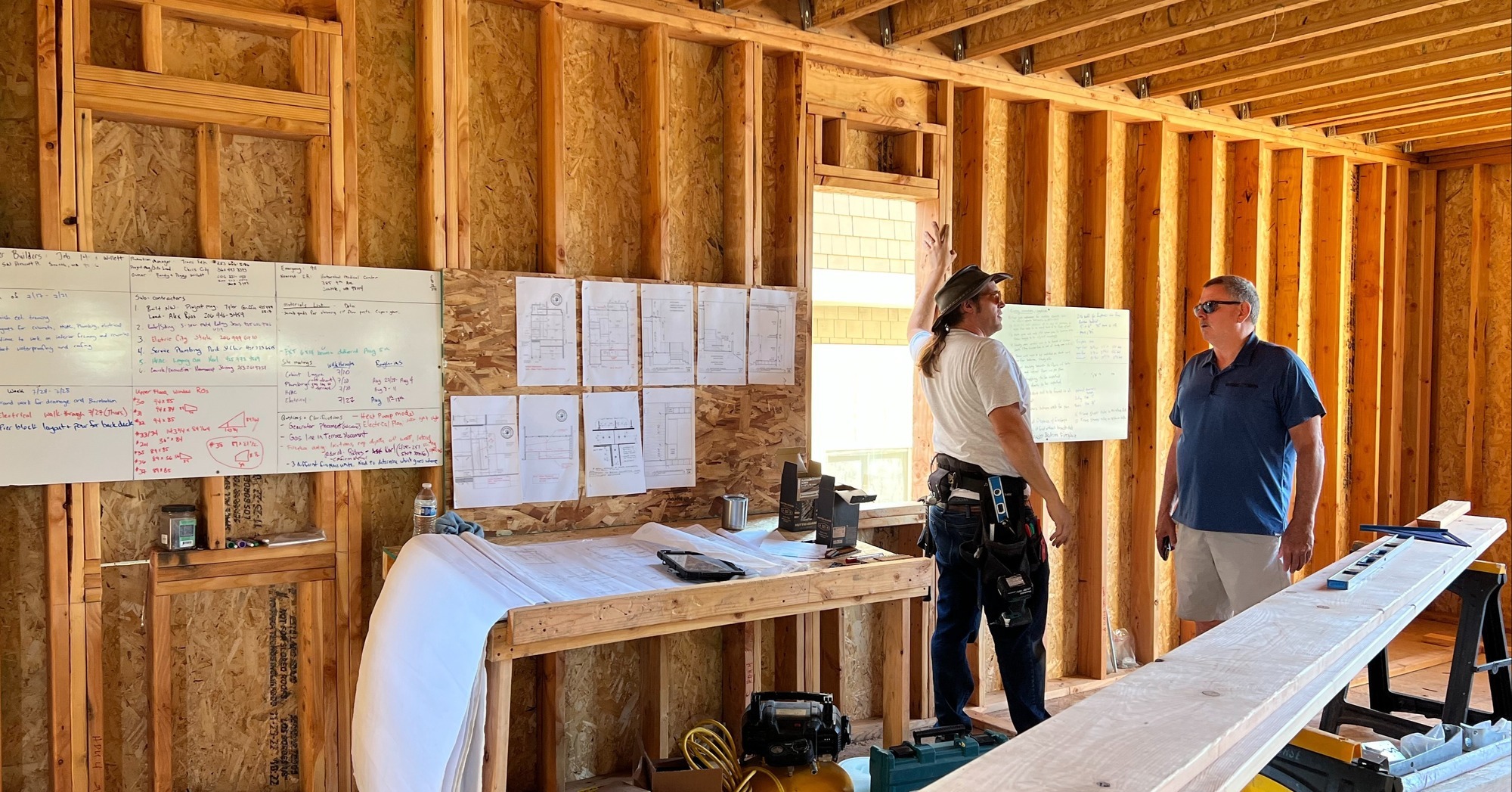
The Multi-Year Infrastructure Shift
Constraints include massive regulatory compliance needs and shifting environmental conditions. The decision point occurs when the planning team hands off to the field implementation team. Failure mode: Field teams perceive the design as “theoretical,” leading to costly, non-compliant field changes. Second-order effect: A breakdown in trust between planning and execution that haunts the project for years.
The Software-to-Operations Handoff
Constraints include high technical debt and legacy user expectations. The failure mode is a lack of “Day 2” support capacity. If the engineering team does not transfer the operational wisdom—how the system behaves under stress—the operations team will view every bug as a catastrophic failure, degrading the user experience.
The Market-Expansion Rollout
Constraints include intense local competition and regulatory uncertainty. The transition here is from regional pilot to national scale. Decision point: Determining whether the pilot team remains as advisors or exits entirely. The risk is that the “pilot-scale” solutions fail to scale, creating a gap that requires emergency intervention from leadership.
Planning, Cost, and Resource Dynamics
| Investment Area | Cost Variability | Opportunity Cost | Focus |
| Transition Planning | Low | Very High | Risk reduction |
| Knowledge Transfer | Moderate | High | Velocity maintenance |
| Audit/Validation | High | Moderate | Compliance assurance |
Tools, Strategies, and Support Systems
-
The “Contextual Archive”: A living, searchable repository that goes beyond static documentation to include the “why” behind key design decisions.
-
Transition Shadowing: A strategy where incoming and outgoing leads work in tandem for a set period, facilitating a transfer of intuition, not just information.
-
Risk-Signoff Gates: Formal agreements where the incoming team identifies and accepts the risks of the prior phase’s output.
-
Automated Impact Analysis: Using digital tools to visualize how a change in one phase ripple through to later dependencies.
Risk Landscape and Failure Modes
The primary failure mode is “institutional amnesia”—the loss of critical context during the shift. This is often compounded by the “exit velocity” of departing teams; once a phase is “done,” their commitment to the quality of the handoff diminishes. The taxonomy of these risks includes:
-
Metric Manipulation: The outgoing team optimizes performance metrics to look good, leaving the incoming team with a hidden burden.
-
Context Deficit: The incoming team lacks the historical perspective, resulting in the repetition of already-failed experiments.
-
Communication Silos: The transition stops at the management level, failing to reach the actual practitioners doing the work.
Governance, Maintenance, and Long-Term Adaptation
A successful transition is not a point of rest; it is the initiation of a new phase of monitoring.
-
Post-Transition Audit: A scheduled review 30 days after the handoff to identify early signs of integration failure.
-
Knowledge Refresh Cycles: The ongoing synthesis of new information, ensuring the documentation remains a living asset.
-
Adjustment Triggers: Pre-agreed metrics—such as a specific dip in velocity or a spike in error rates—that automatically trigger a re-evaluation of the transition’s success.
Measurement, Tracking, and Evaluation
-
Leading Indicators: Alignment scorecards where incoming and outgoing teams rate their readiness and understanding of project requirements.
-
Qualitative Signals: The quality of questions asked during the handover sessions. A lack of probing questions is often a sign of a superficial transition.
-
Documentation Example: The “Assumption Log,” where the outgoing team explicitly lists all the variables they assumed to be true, allowing the incoming team to validate them against current conditions.
Common Misconceptions
-
Myth: “The phase is done when the work is done.” Correction: The phase is done when the work is integrated, understood, and accepted by the successor.
-
Myth: “Checklists guarantee success.” Correction: Checklists ensure compliance, but only human judgment ensures readiness.
-
Myth: “Transition is a linear, one-way street.” Correction: Effective managers build “feedback loops,” allowing the incoming team to request clarification or re-work before the outgoing team fully disengages.
Ethical, Practical, and Contextual Considerations
The duty of the project manager is to ensure the long-term viability of the initiative, not just the short-term delivery of a phase. “Dumping” a complex project on an unsuspecting team is both an operational failure and an ethical lapse. It demonstrates a lack of respect for the organization’s resources and the people tasked with carrying the project forward. True leadership is defined by how well the team functions in one’s absence—and by how seamlessly they are set up for success by their predecessors.
Conclusion
Managing transitions is the invisible architecture of organizational success. By shifting the focus from the act of handing off to the process of integration, leaders can protect the project from the inherent friction of change. This requires a commitment to rigor, a culture of radical transparency, and the intellectual honesty to acknowledge that every phase transition is a high-risk event. Organizations that master these junctures do not just deliver projects; they build the collective capability to navigate uncertainty, turning the inevitable disruptions of change into opportunities for refined strategy and sustained, efficient delivery.